Ministry of Finance through INETL, I.P, was entrusted to provide training to MCI employees on Trade Data Analysis
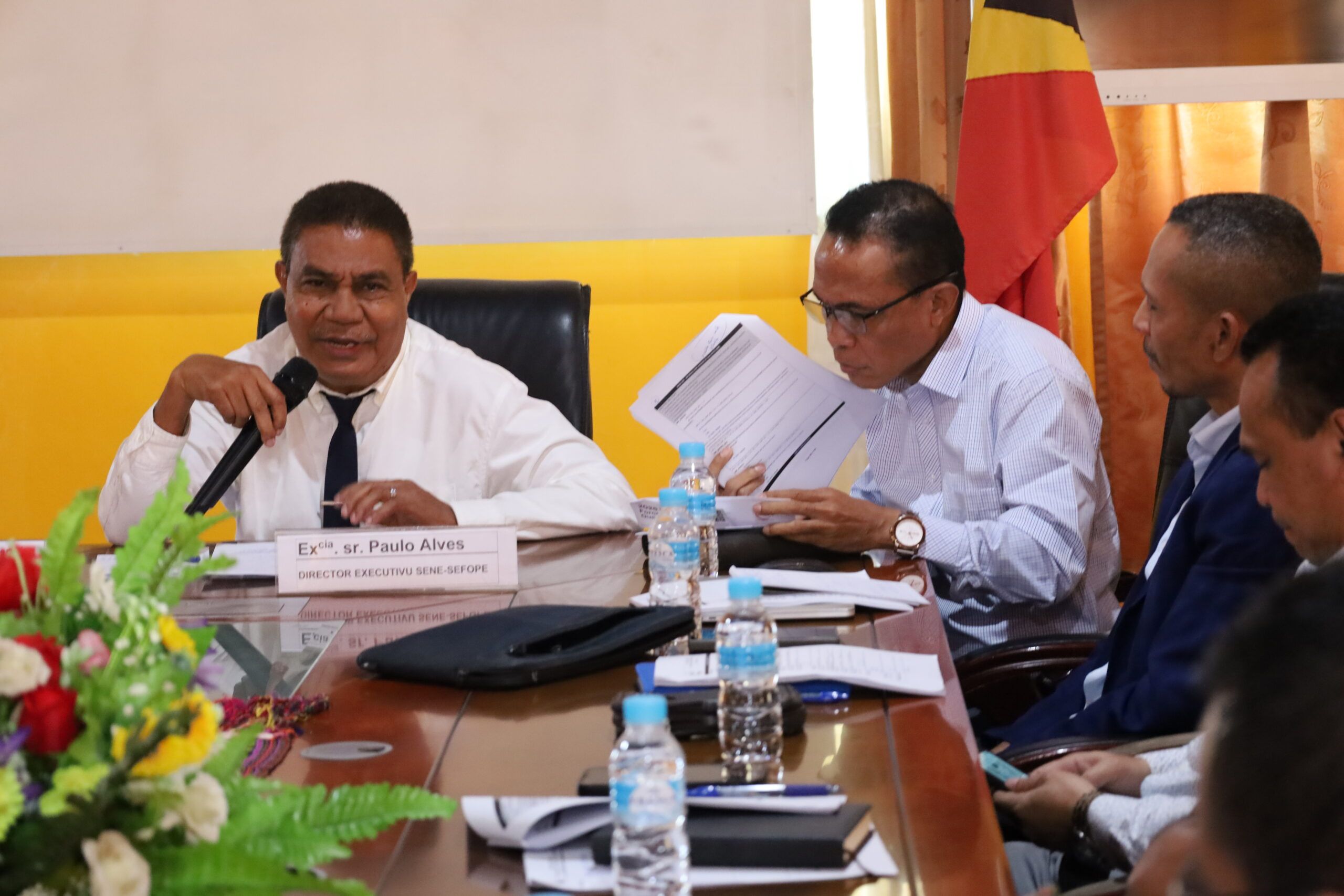
Díli, 01 July 2026 – The Ministry of Finance, through the National Institute of Statistics of Timor-Leste (INETL, I.P.), in cooperation with the Ministry of Commerce and Industry (MCI), particularly the General Directorate of Commerce, conducted training on “Commercial Data Analysis” for 30 national and municipal employees working under the General Directorate of Commerce. The training will last three days, from Wednesday, July 1, to Friday, July 3, 2026, at the MCI meeting hall.
The Director General of Commerce, Mr. Elias de Jesus Fatima, expressed his gratitude that the eighth government established a Memorandum of Understanding (MoU) between MCI and the Ministry of Finance through INETL, I.P. At that time, INETL technicians also provided training to some employees of the General Directorate of Commerce, which was held in Gleno, Ermera Municipality.
The objective of this training is for trainers from INETL, I.P. to guide MCI employees, especially those in the General Directorate of Commerce, in collecting, processing, and analyzing data so they can ultimately provide data and information to leadership, according to Mr. Fatima.
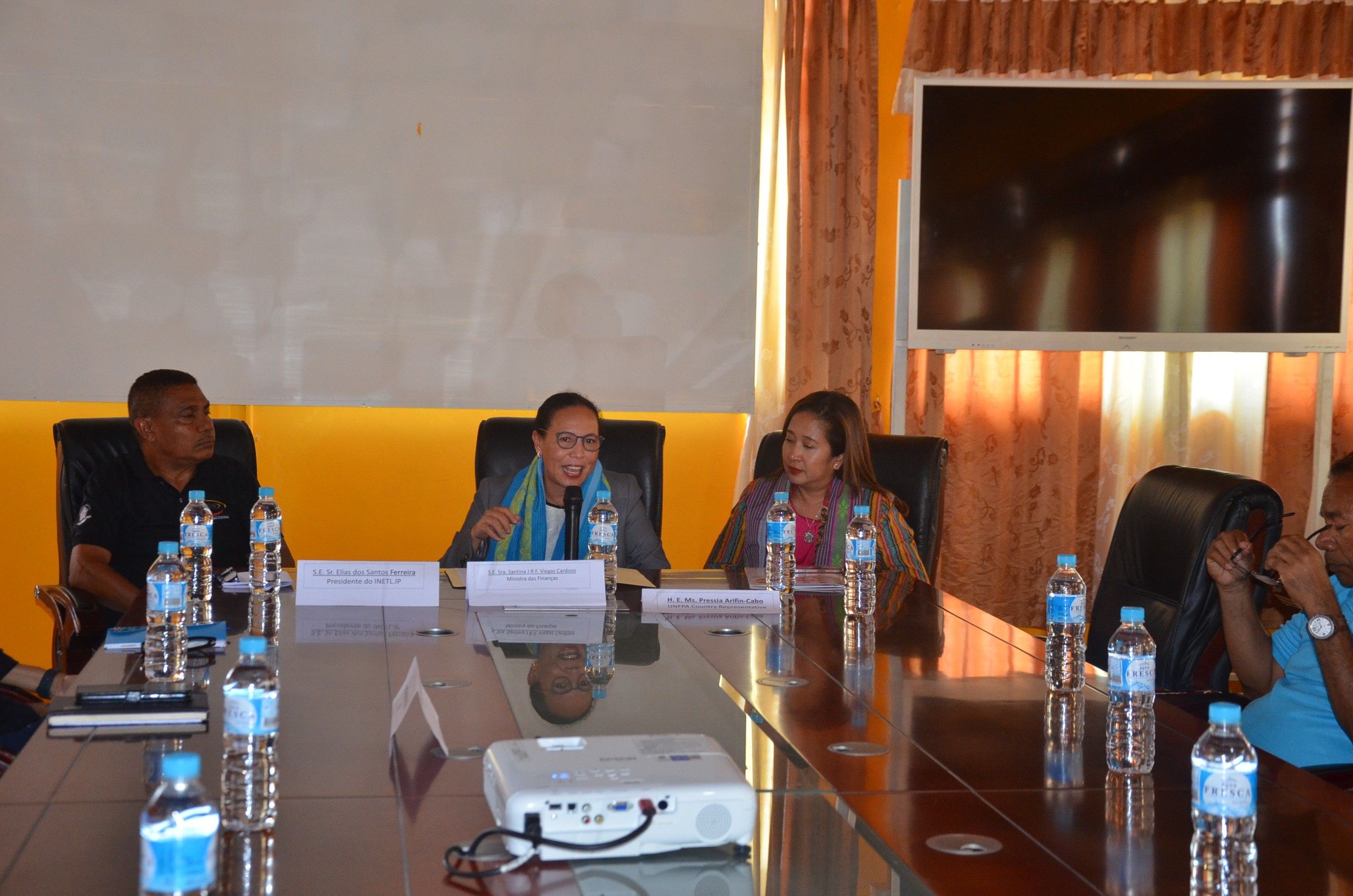
INETL President, I.P., Mr. Elias dos Santos Ferreira, said in his speech that through this training, it is hoped that employees can increase their technical capacity in analyzing and interpreting commercial data to support evidence-based policy formulation. With good and reliable data, the government can respond quickly to market challenges and strengthen the stability and development of the national economy.
During the opening ceremony, the Head of the Minister’s Cabinet (MCI), Mr. Julito Soares, who represented the Minister and Deputy Minister of MCI, officially opened the training. In his remarks, he stated that the trade sector is currently facing rapid changes due to globalization, digital transformation, shifts in the global supply chain, and technological development. Therefore, governments need to make decisions based on evidence and accurate data to ensure public policies are effective and responsive to market needs. Mr. Soares added that the Ministry of Commerce and Industry considers trade data analysis a strategic tool for understanding national and international market movements, monitoring the evolution of basic goods prices, analyzing import and export volumes, identifying business and investment opportunities, preventing supply disruption risks, and preparing better policy recommendations for the government.